
 Famous Faces, Famous Places and Famous Foods


American Cities Can Be Civil
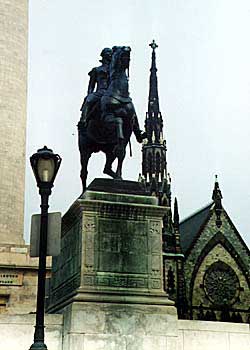 Thousands of Americans fly thousands of miles every year to visit European cities. When they do, they go into the city and walk the streets rather than go to a suburban shopping mall. It’s also likely these tourists have never visited Chicago, New York or Philadelphia, let alone Pittsburgh, Cleveland and Louisville. Further, Americans who live in these urban areas rarely go into town. And there is good reason.
American cities, though somewhat improved, are still a mess. In an urban era where streets go unplowed and un-swept; where parks -- if built -- are never repaired; where trash is picked up sporadically; where taxes are high and climbing; where the value of services such as police protection is debated; a time is at hand when the role of local government must be reevaluated.
Early in his career when Robert McCormick ran for Twenty-First Ward Alderman in Chicago, he promised to fight for cleaner streets, fairer taxes, more parks and bridges, and an honest expenditure of city funds. Almost a century later such a campaign would seem odd, our modern era concerned instead with “economic development,” which tends to mean passing out money to sports franchises and entertainment companies in hopes of attracting tourists to our center-cities.
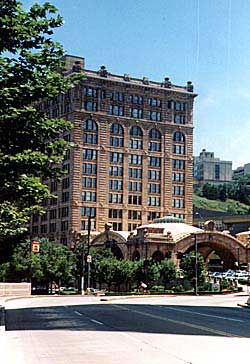 But cities must be places for people to live. Americans undoubtedly enjoy visiting European cities because they are pleasant places where services are premium. The litter is thrown in trash cans, the streets are clean and civic art is more important than a new Planet Hollywood. More than a century after City Beautiful planners set out to make American cities better places to be, some are once again rediscovering what makes a city a good place for people. New York is one. Few would argue that the Big Apple is a better place to live or visit now than it was just a few short years ago. But New York didn’t improve by attracting the latest in tourist attractions (though it has through the Disney-fication of Times Square).
New York improved because mayor Giuliani set out to make the city a safe, clean, and pleasant place to be. “The first couple of days when I was Mayor of New York City, I said the most important civil right was safety,” Giuliani stated. “Everything else happens because people can feel a certain degree of safety in moving out of their apartments, out of their homes.” After crime, Giuliani went on to attack more trivial civil disorders such as graffiti, jay-walking and littering. Today New York is starting businesses, attracting tourists and pleasing residents at record levels.
Giuliani isn’t the first person to summarize that disorder breeds disorder. George Pullman made a fortune off of the same idea. Pullman, whose name is synonymous with the passenger car industry, discovered that if you made railroad cars nice, not only would people act in a more behaved manner, but they would treat the equipment better and perhaps most importantly, pay more. The same principle works in Pittsburgh’s subways. With Classical music piped through the underground granite waiting areas, there is less litter, less loitering and the subway stations are welcoming places to wait for trains. Sadly, above ground the story for Pittsburgh isn’t always so pleasant.
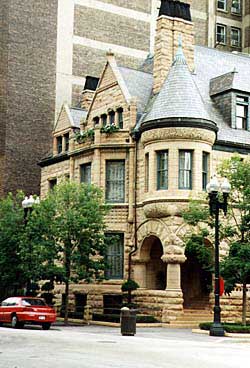 Walking along the Point, a park where the Allegheny and Monogahela Rivers meet to form the Ohio River, you will notice that the slate path stones placed there when the park was built in the 1960s have been carelessly patched with asphalt. Above the park along the Monongahela Boulevard is a 1920s art-deco fence rusted and dented almost to the point where it will fall off into the river. The city’s downtown is often littered with trash and this past winter snow went unplowed for days with Public Works officials claiming that new employees couldn’t find all the streets. It would be hard to deny that Pittsburgh’s suburbs are often a more attractive place to be than downtown. The story is true for other American cities as well.
Urban sociologists have claimed that attention to details like picking up the trash, plowing the snow and fixing the broken windows can reverse the decline in American cities. Broken windows, litter and graffiti serve as a symbol that the city is a place to be careless or even criminal without too many ramifications, a sign that no one will care. The reverse, that failing to fix these things leads to eventual decline and decimation, is more widely accepted as true and commonly known as the “broken glass theory.”
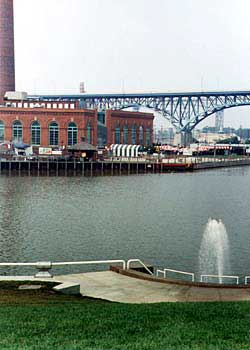 But unlike New York, other American cities continue to ignore the details and cut services in order to concentrate of attracting tourists through cookie-cutter projects like aquariums, stadiums and theme restaurants. These projects, instead of making the city into a nice place to live, work to attract tourists looking for parking places, eager to carelessly discard trash and equally eager to get out when the game is over. These one-size-fits-all projects serve to scar the city with parking lots and aggravate residents.
Parking lots of course are great places to throw trash as well. Just look at any given lot after the tailgating activities at a football game. Further, parking lots, because of their size and unattractiveness, make just walking around in a city undesirable. Just spend time strolling past small storefronts along a tree-lined street and then take the same amount of steps through a parking lot. Parking lots, like litter and graffiti, make the city an unattractive place to visit as well as live.
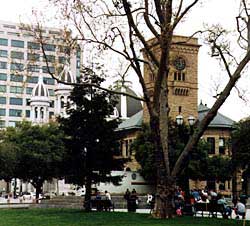 Cities that work are cities where people live... and want to live. These are also the cities people like to visit, and a reason why Americans look forward to time spent in Paris, but dread a trip to downtown Cleveland. Elected officials in American cities need to work to serve the people who live in the city, not to make the city an occasional playground for those who live somewhere else by attracting sports teams and theme restaurants. Cities that have paid attention to the details have seen a dramatic reversal in crime, loitering, even littering, and a general return of respect for public areas. These cities have become civil.
America is where the city grew to show her true form. The United States was the first true urban country. American cities were places of amazing architectural achievement, civic pride and the places where big dreams came true. Then something happened and we gave up and moved to the suburbs and decided we would occasionally travel to enjoy European cities, neglecting our own.
Chicago, Nashville, New Orleans, Detroit, Baltimore, Pittsburgh, Buffalo, Cincinnati, Oakland and Philadelphia are still all places with an enormous amount of local character, history, charm and possibility. If we invest in them, clean them up, make them safe places with superior services, America can once again become an urban country with cities ranking in desirability with London, Paris and Berlin. No longer will we wander off to see Prague without having first come to know the City of Broad Shoulders, the City of Brotherly Love or the Big Apple.